
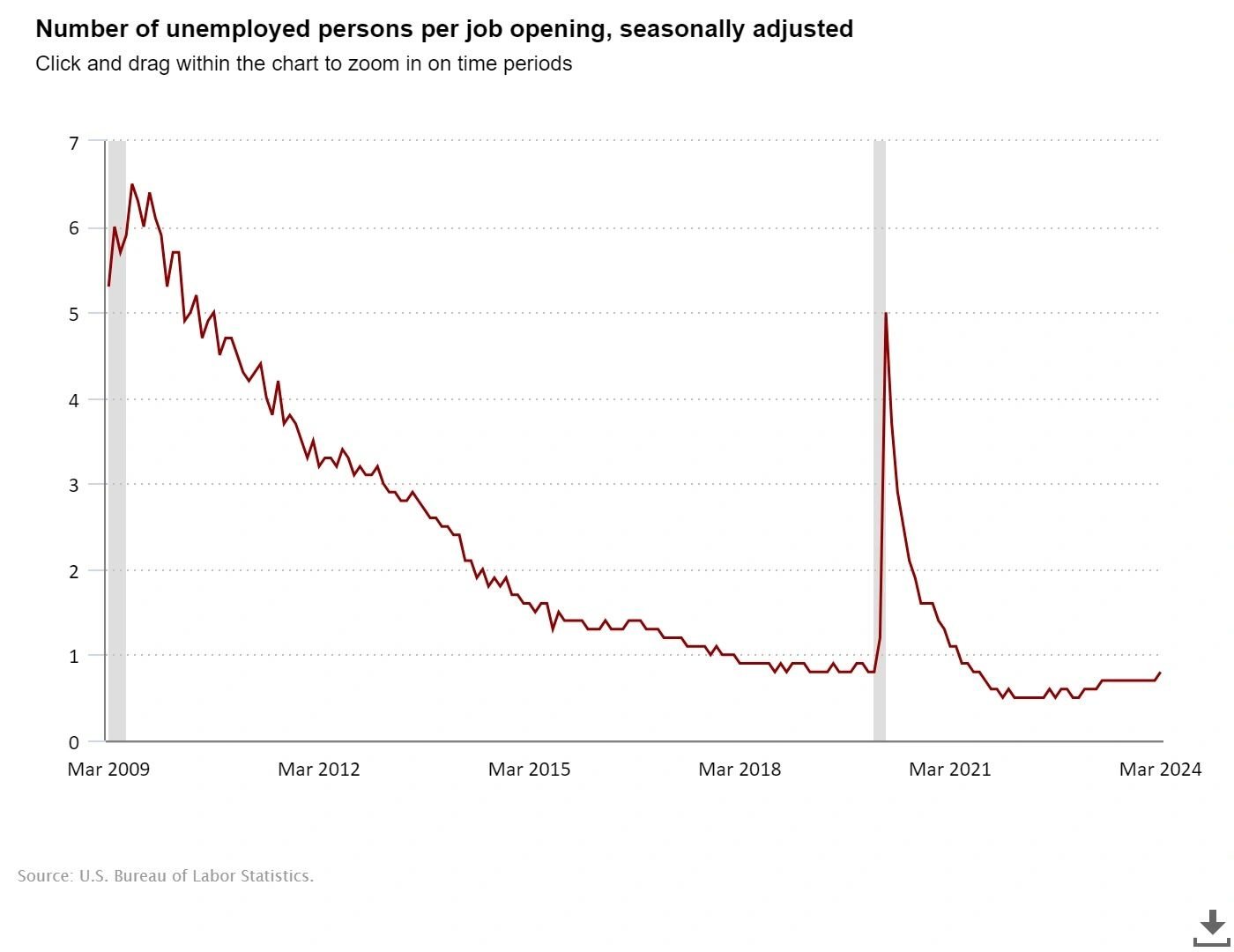
In March 2024, the U.S. job market presented a set of intriguing figures that shed light on the ongoing employment trends and workforce dynamics. A detailed analysis of the latest data from the Bureau of Labor Statistics (BLS) reveals both opportunities and challenges within the economy. Here, we dissect these critical metrics to understand their implications for workers and employers alike.
Robust Job Openings Signal Strong Demand for Labor
March 2024 saw an impressive number of job openings, totaling approximately 8,488,000. This indicates a job openings rate of 5.1%, a robust figure that suggests employers are actively seeking to fill positions. This high level of openings is a positive sign, pointing to a strong demand for labor and potentially signaling economic growth and confidence among businesses. Job seekers in various sectors may find this an opportune time to seek new positions or negotiate better terms for their employment.
Hiring Rates and Employment Dynamics
The hiring rate in March stood at 3.5%. While this figure might seem modest compared to the openings rate, it reflects the ongoing placements that are filling the vast number of available positions. This rate is crucial for understanding how quickly job vacancies are being converted into actual employment, impacting everything from individual career progression to overall economic productivity.
Worker Confidence Indicated by Quits Rate
One of the more telling statistics in the job market is the quits rate, which was recorded at 2.1% in March 2024. A high quits rate typically indicates that workers feel confident in securing new job opportunities, often leaving their current positions for better pay, improved working conditions, or more suitable locations. This metric is a vital sign of a dynamic job market where employees are willing to transition to better their employment situations.
Total Separations and the Nature of Job Transitions
Total separations, which include quits, layoffs, and other discharges, had a rate of 3.3% in March. This figure helps us understand the overall turnover in the job market, encompassing both voluntary and involuntary separations. Notably, the layoffs and discharges rate stood at a low 1.0%, indicating stability in the job market and suggesting that most separations were voluntary.
Implications for Policy Makers and Businesses
The data from March 2024 offers valuable insights for both policymakers and business leaders. For policymakers, understanding the dynamics of job openings, hires, and separations can inform decisions on training programs, unemployment benefits, and labor regulations. For businesses, these metrics are crucial for planning recruitment strategies, assessing labor supply, and developing retention policies to navigate an increasingly competitive job market.
The March 2024 job market data from the BLS highlights a landscape filled with opportunities and movements. With high job openings and a significant quits rate, it is clear that the labor market is active and fluid. Employers need to be proactive in their recruitment and retention strategies, while job seekers might find it advantageous to explore the opportunities that align with their career goals. As the job market continues to evolve, staying informed with such data is essential for anyone engaged in the modern economy.